
Cricket Bat Profiles Explained: Duckbill vs Hawkbill, Mid, Low or High

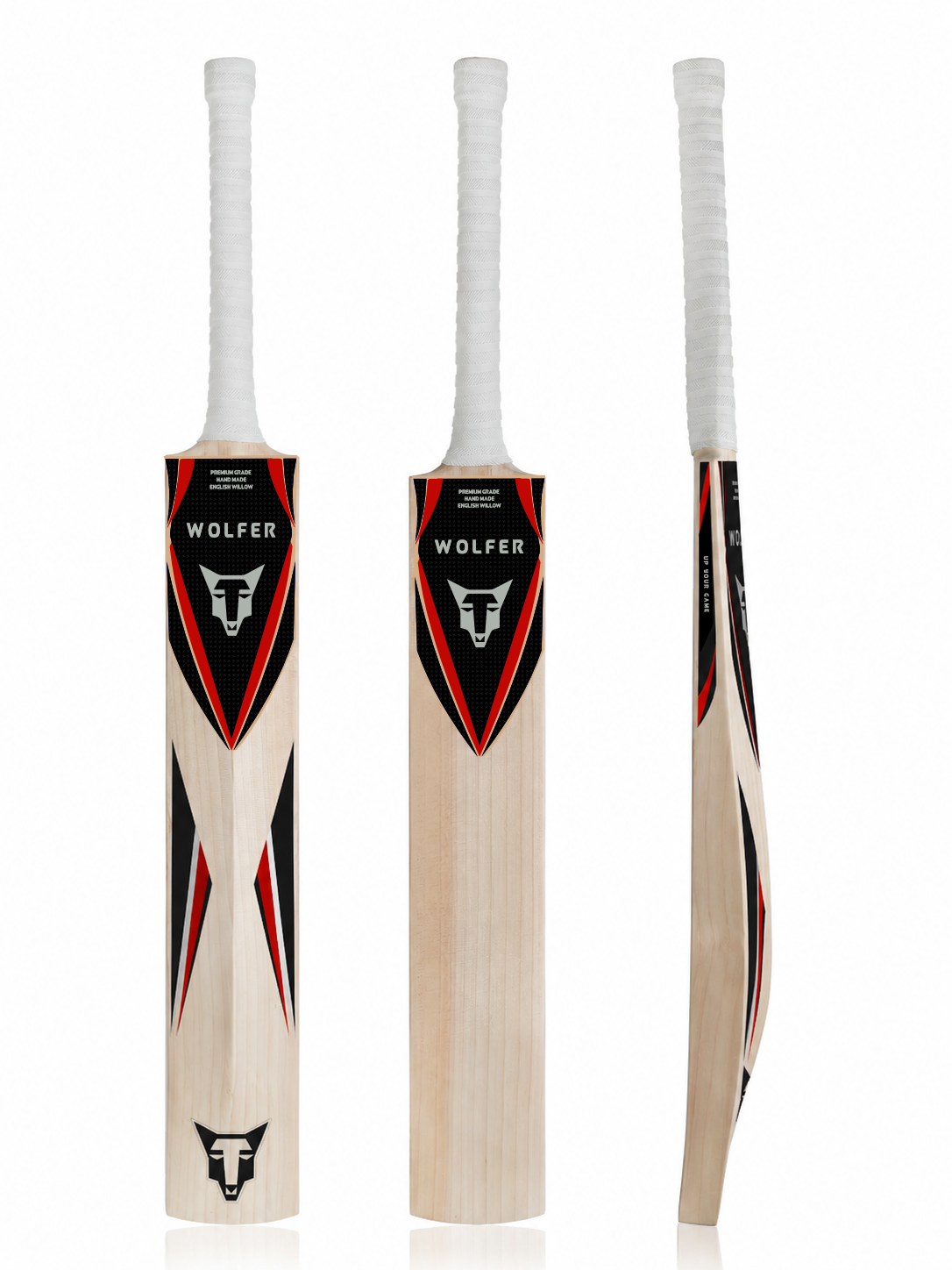
Two bats can weigh exactly the same and feel completely different in your hands. The difference is the profile: how the willow is shaped and where the weight sits. This guide explains what each profile does, who it suits, and how to choose the right one for your game.
What is a cricket bat profile?
A bat’s profile is the shape of the blade seen from the side: how thick it is at each point from shoulder to toe, how big the edges are, and how high the spine rises at the back. The profile decides two things that matter to every batter:
- Where the sweet spot is, the area of the blade that sends the ball furthest with the least effort.
- How the bat picks up, meaning how light or heavy it feels when you lift and swing it.
Parts of a cricket bat
| Part | What it is | Why it matters |
|---|---|---|
| Blade | The willow hitting area | Grade and grains affect feel and performance |
| Spine (ridge) | The raised ridge down the back | A taller spine puts more wood behind the ball |
| Swell | The thickest part of the blade | Sets the position of the sweet spot |
| Edges | The sides of the blade | Thicker edges make mishits more forgiving |
| Shoulders | Where the blade meets the handle | Shape affects balance and pickup |
| Toe | The bottom of the blade | Shape affects weight low down and durability |
| Handle and splice | Cane handle set into the blade | Absorbs shock and controls feel |
Sweet spot positions explained
The sweet spot sits around the swell, where the most wood is. Moving the swell up or down the blade changes how the bat plays.
| Sweet spot | Feel | Plays best on |
|---|---|---|
| Low | Weight towards the toe, powerful on full balls | Slow, low pitches; full and yorker-length deliveries |
| Mid-low | Most of the wood in the lower half | Drives and sweeps; typical UK and subcontinent pitches |
| Mid / extended mid | Balanced, with a long, forgiving hitting zone | All pitches and all formats |
| Mid-high / high | Higher balance point, lighter pickup | Bouncy pitches; cuts, pulls and back-foot play |
Rule of thumb: match the sweet spot to where you usually make contact. Front-foot drivers hit lower on the blade; back-foot players hit higher.
Which profile suits you?
| Profile | Suited for | Trade-off |
|---|---|---|
| Low (bottom-heavy) | Front-foot drivers who want maximum carry on full-length deliveries; slow, low pitches | Heavier pickup, slower to react to short balls |
| Mid / extended mid | All-rounders who play every format and want a big, forgiving sweet spot | Slightly heavier pickup than a Hawkbill |
| Duckbill (thick toe) | Power hitters who drive full balls and want solid wood low down for lofted straight drives and yorkers | Heavier pickup than a Hawkbill |
| Hawkbill (thin toe) | Back-foot players and T20 hitters who want a lighter pickup and faster hands for pulls, hooks, cuts and late shots | Less wood near the toe, so less forgiving on yorkers |
Why a bottom-heavy bat carries further on drives
When you hit a full ball low on the blade, a bottom-heavy bat has more wood directly behind the point of impact. Less energy is lost in the collision, so at the same bat speed the ball leaves the bat faster and carries further.
Why a lighter toe feels faster
Taking wood out of the toe moves the balance point up towards the hands. The bat feels lighter to pick up and quicker to swing, which helps when you need to react late to short balls or generate hand speed in T20 hitting.
Duckbill vs Hawkbill
Bat makers use toe names in different ways. At Wolfer, we use two clear terms so you know exactly what you are getting:
| Duckbill | Hawkbill | |
|---|---|---|
| Toe | Thick, full toe | Thin, tapered toe |
| Weight | More wood low on the blade | Weight moved up towards the hands |
| Pickup | Solid, bottom-weighted | Light and quick |
| Best shots | Straight and lofted drives, full balls, yorkers | Pulls, hooks, cuts and late, wristy shots |
| Suited for | Front-foot power hitters; slow, low pitches | Back-foot players and T20 hitters; bouncy pitches |
Same shot, same swing speed: the Duckbill’s extra wood low down sends a full ball further. The Hawkbill’s advantage is that most players can swing it faster and react later.
Pickup vs dead weight
Dead weight is what the bat weighs on a scale. Pickup is how heavy it feels when you hold it in your stance and lift it. A bat with a higher balance point picks up lighter than a bat of the same weight with its mass near the toe.
Many modern bats are concaved (scooped) at the back: wood is removed from either side of the spine. This keeps big edges and a tall spine while bringing the overall weight down.
When choosing a bat, trust the pickup more than the number on the label. Hold it in your stance and play a few shadow shots before deciding.
Toe shapes
- Round toe: the traditional shape. With no sharp corners, it is the most resistant to chipping.
- Square toe: a modern look that keeps more wood at the bottom of the blade. The corners need extra care and a toe guard.
- Thick, full toe (Duckbill): keeps the most wood at the bottom of the blade for power on full balls. Solid and durable, with a heavier pickup.
- Thin or tapered toe (Hawkbill): less wood at the bottom for a lighter pickup. Use a toe guard, as a thinner toe has less wood to protect.
Whatever the toe shape, never tap it hard on the ground and always oil and protect it. Willow at the toe soaks up moisture fastest.
What the Laws of Cricket allow
MCC Law 5 sets maximum bat dimensions. Since 2017, umpires can check the edges and depth with a bat gauge.
| Measurement | Maximum |
|---|---|
| Overall length | 38 in (96.5 cm) |
| Blade width | 4.25 in (10.8 cm) |
| Depth (spine) | 2.64 in (6.7 cm) |
| Edge thickness | 1.56 in (4.0 cm / 40 mm) |
Any bat advertised with edges over 40 mm cannot be used in matches played under the MCC Laws.
FAQs
What is the best cricket bat profile for beginners?
A mid or extended mid profile. It gives a large, forgiving sweet spot and suits every type of shot while you develop your game.
Should I choose a Duckbill or a Hawkbill?
If you score mostly on the front foot and like hitting straight, choose a Duckbill. If you score mostly off the back foot with pulls, hooks and cuts, or want faster hands for T20, choose a Hawkbill.
Does a heavier bat hit the ball further?
At the same bat speed, more mass behind the point of impact sends the ball faster. But a bat that is too heavy slows your swing, so the right weight is the heaviest bat you can swing comfortably and control.
Does a bigger edge make a better bat?
Bigger edges make mishits more forgiving but add weight. Edges are limited to 40 mm by the Laws of Cricket.
How do I know where my sweet spot should be?
Look at where the ball marks appear on your current bat after a few sessions. Mostly low on the blade suggests a low or mid-low profile; mostly in the middle or higher suggests a mid or mid-high profile.
Every Wolfer bat page shows its profile, weight and size guide, so you can choose with confidence.
Shop Wolfer Cricket BatsSources: MCC Laws of Cricket, Law 5: The Bat.